Q3 2020 Market Update

Today’s Bifurcated Market
Tech stocks, covid/shutdown beneficiary companies, and software company shares have been on a tear this year, up around 31% as represented by the technology sector ETF QQQ. This year’s shutdowns and restrictions accelerated trends that were already in place for technology sector equities. I guess that goes without saying. Adding the fuel to those share prices was the Federal government, as explained in the last newsletter, through massive monetary and fiscal stimulus.
Other more cyclical sectors such as energy, financials, and most consumer discretionary have received the opposite treatment to the extreme.
Intuit and Shopify
To demonstrate, let’s compare Intuit and Shopify, two tech stocks with a lowly financial stock. Intuit’s shares have climbed 25% this year even with a little dip in September.
Now, we don’t disagree that Intuit has a good thing going with their sticky software accounting solutions for small businesses. But in our opinion prices and value matter. In the graph above, look at that parabolic stock price rise (black line). The shares trade for 46X trailing 12 months diluted earnings. This is well above the normal 25X to 30X the shares have traded at historically – represented by the blue line on this chart.
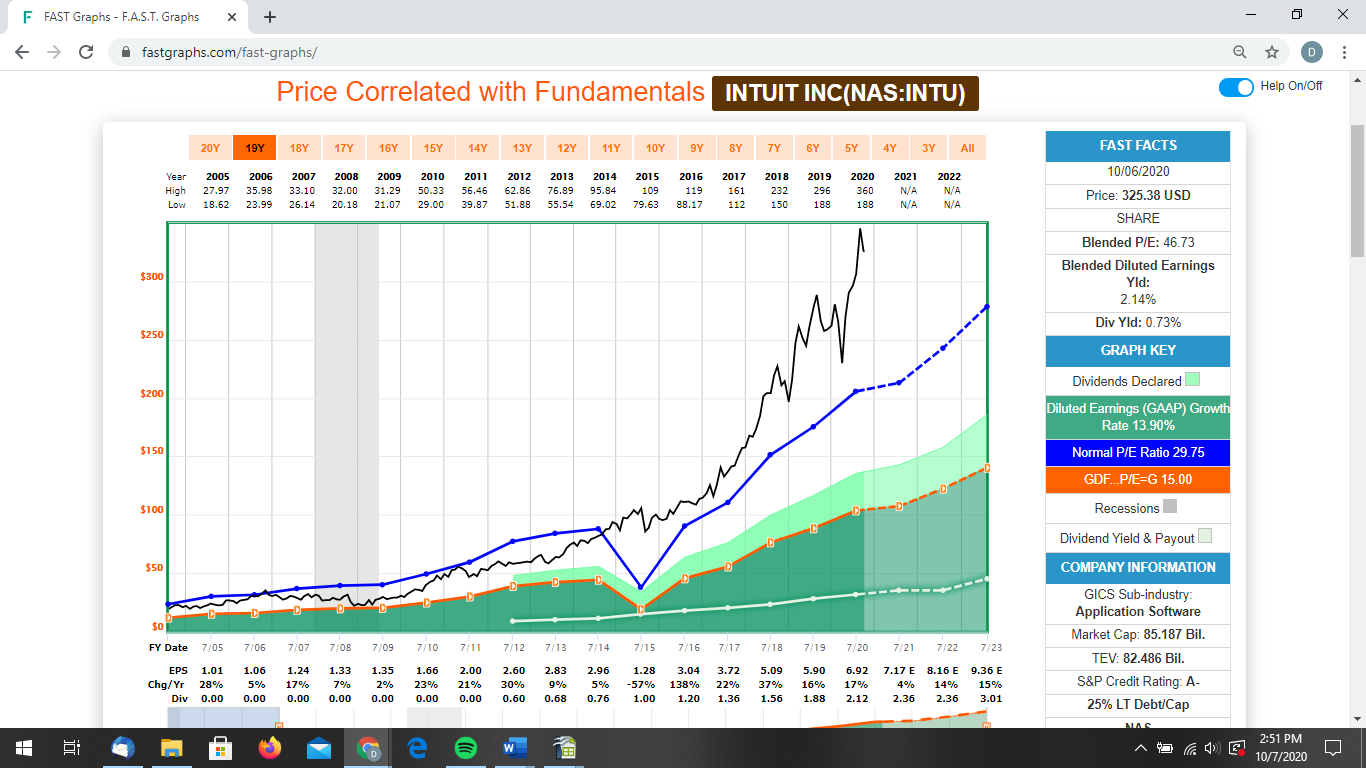
The orange line represents the company’s earnings growth rate with the earnings of the company in the shaded dark green area. The company’s growth rate as been consistent and impressive at 13%.
The great investor Peter Lynch opined that stocks trade roughly at their appropriate price when the growth rate of company earnings and the P/E multiple are equal. If this were the case with Intuit, the shares would be priced around $103, or 68% lower to reach fair value.
Or, let’s take a look at Shopify, a company with very fast revenue growth. The company is certainly in the right space at the right time with its ecommerce back-end systems by subscription. However, shares trade at 44X trailing 12-month sales. Not earnings, sales. The company does not have any earnings to speak of after 5 years of being publicly listed. They have been understandably plowing all money into growth. But things would really have to go right (or perfectly) over the next 10 to 20 years to grow into a valuation like that. In the tech space there is always a possibility of increased competition.
Vs. Lincoln Financial Group
On the opposite side of the aisle we’ll look at Lincoln Financial, a company that sells annuities and other insurance products, and makes money from investments. I could have substituted several companies in the place of Lincoln.
The company trades at around $34 per share with nearly $70 per share in the most relevant book value metric, so half the price of its assets. There is a perception in the marketplace that the death escalation from covid will hurt life insurance companies. However, most of the people dying from covid do not have life insurance, either due to age or socioeconomic condition.
As you can see from the following graph showing diluted net earnings in the dark green, the company has consistently made money though they do suffer some during recessions.
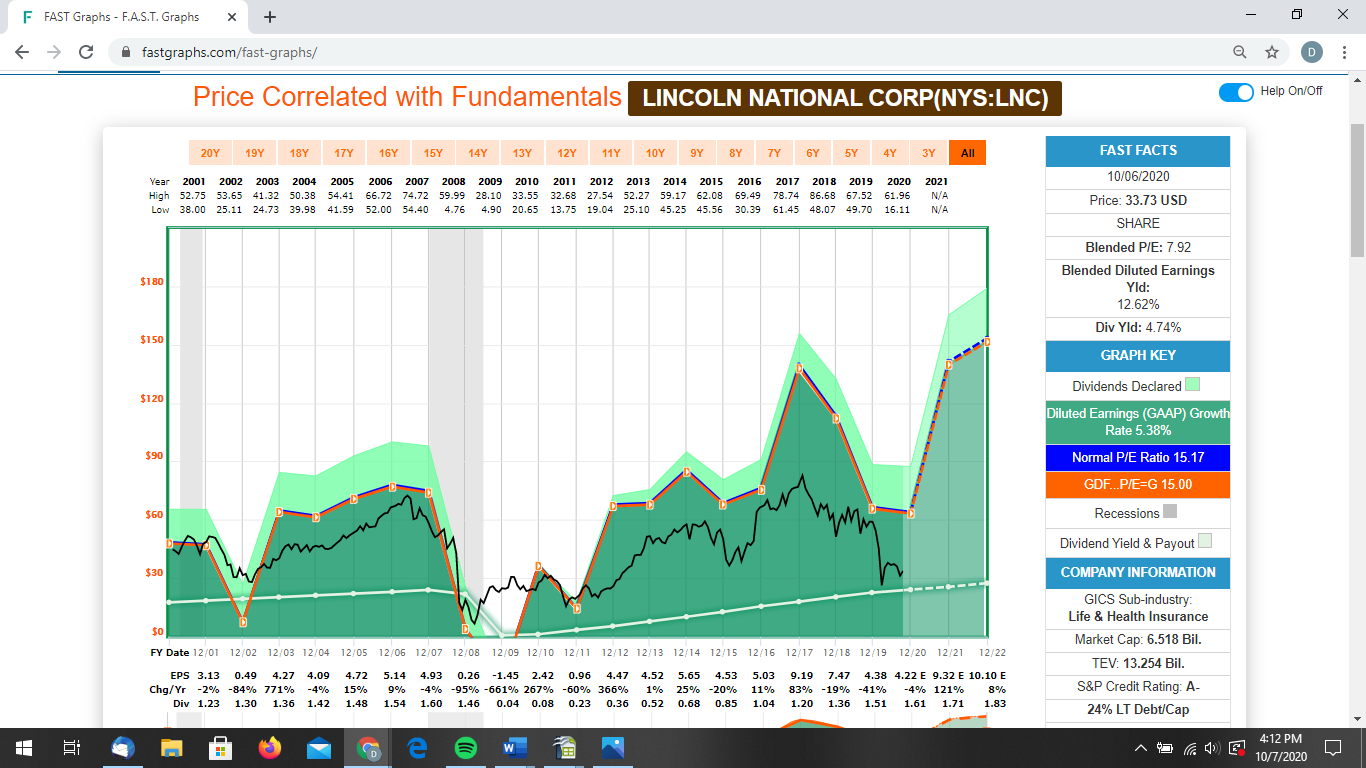
The share price (black line) is trading well below the earnings line (orange line). This chart at least predicts a rapid recovery in earnings over the next couple of years. The price/earnings ratio listed here is just under 8X and the diluted earnings yield is over 12%.
I’ll sum it all up to say that many stocks in the tech sector are trading at extreme prices, maybe not quite circa 1999 levels, but close. We believe that new market participants see these stocks as safe for misguided reasons while a substantial margin of safety really does exist for many equities in beaten down value sectors. Generally, these value sectors that should rebound as covid abates is where we continue to do most of our gem digging.